Brain Builders
How your child's brain learns to read: the science behind phonics
Reading isn't something children's brains are born ready to do. Here's what phonics actually teaches, what the research shows happens in the brain as children learn, and the simple things that help most at home.
BAMJOY Editorial Team · 10 min read · For Families ·
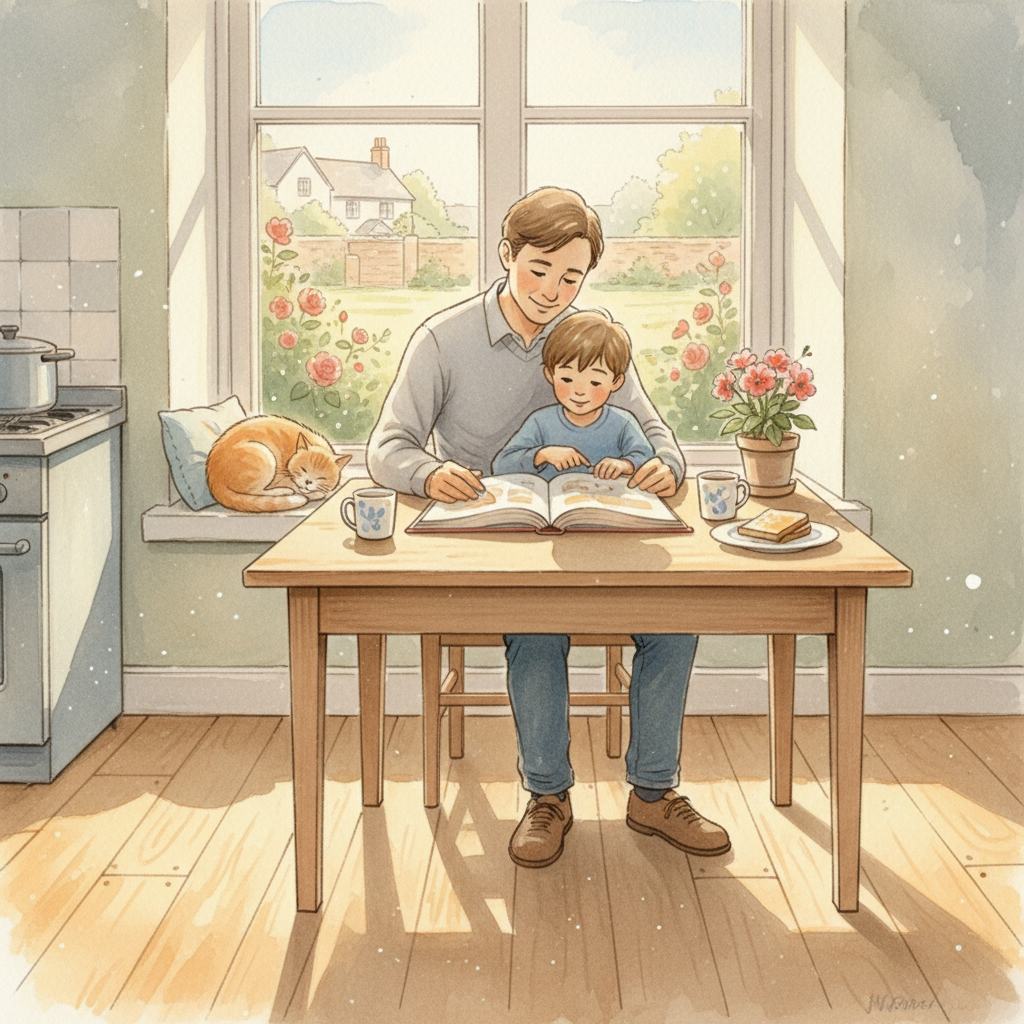
Reading is something the brain has to learn
Children learn to talk without lessons. Put a baby in a home full of conversation and, give or take, speech arrives on its own. Reading is different. Writing was invented only around 5,000 years ago, far too recently for evolution to give us a part of the brain built for it.
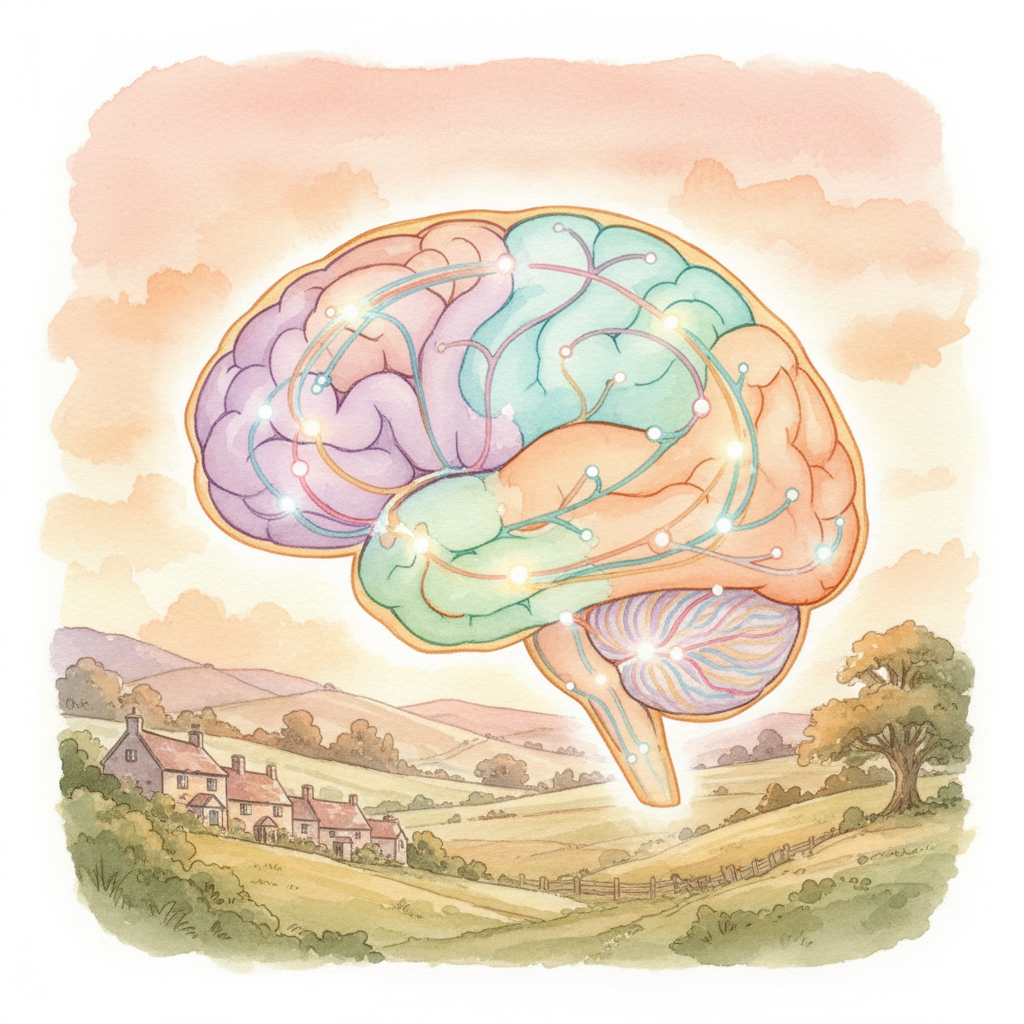
So every child who learns to read has to build the ability from parts that were designed for other jobs. The neuroscientist Stanislas Dehaene calls this "neuronal recycling": areas used for recognising objects and faces get retrained to recognise letters, then wired up to the areas that handle speech sounds and meaning. Maryanne Wolf describes the same process in her book Proust and the Squid, where she calls the finished product "the reading brain".
That's worth knowing as a parent. If reading feels slow and effortful for your child at first, that isn't a sign something is wrong. Their brain is doing construction work.
What phonics actually teaches
Phonics is the method schools in England use to teach that construction work. It teaches children that spoken words are made of small sounds, called phonemes, and that each sound is written with a letter or group of letters, called a grapheme.
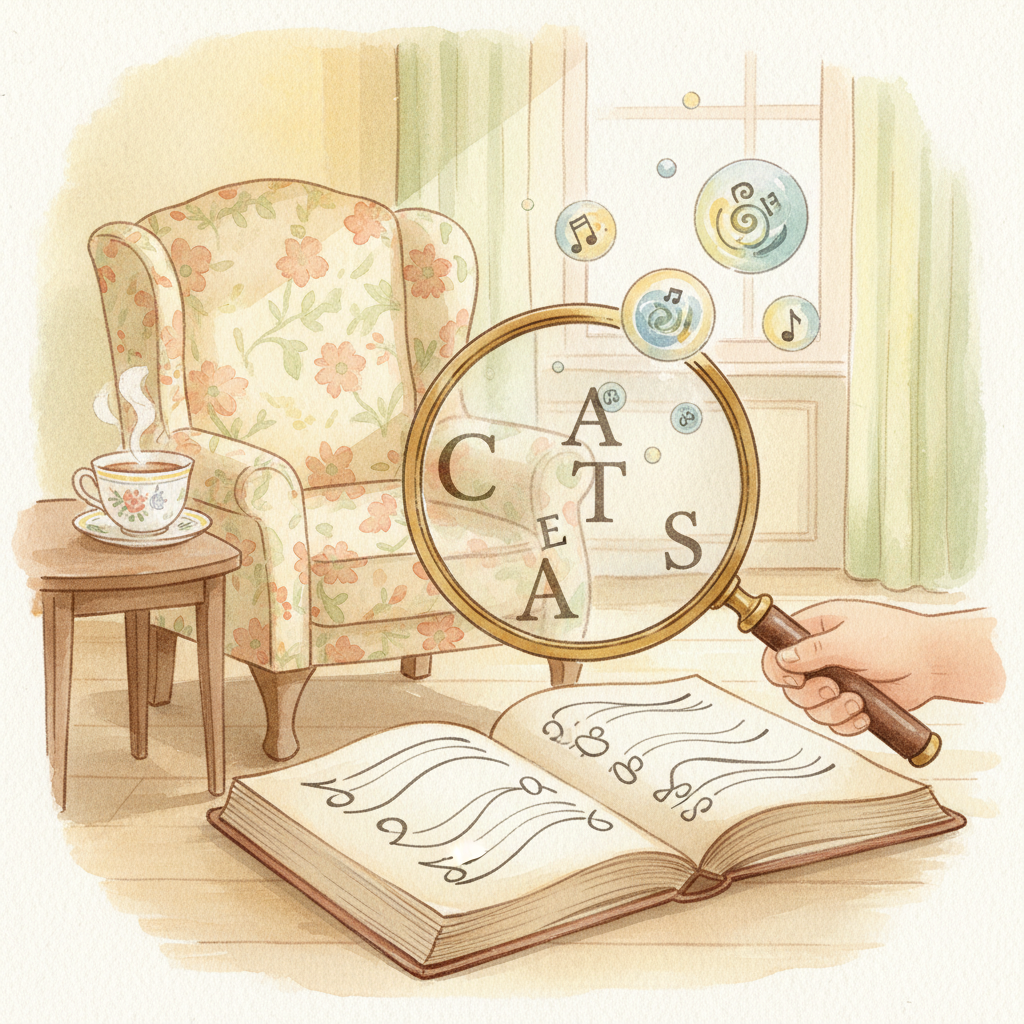
Children learn two skills that mirror each other. Blending is for reading: they say the sounds in order, /c/ /a/ /t/, and push them together to hear "cat". Segmenting is for spelling: they hear "cat", break it back into /c/ /a/ /t/, and write a letter for each sound.
Schools teach this in a fixed order, usually described in phases. In Phase 2, normally in the first term of Reception, children learn single sounds such as s, a, t and p, and start blending simple words. Later phases add sounds written with two letters (sh, ch, ai, ee), then longer words, then alternative spellings of the same sound, such as the "a" sound in rain, day and cake.
The Department for Education expects schools in England to teach phonics through one of its approved (validated) programmes. In June of Year 1, children take the Phonics Screening Check: they read 40 words aloud to their teacher, some of them made-up words, so the check shows whether they can decode rather than recognise words they've memorised.
What changes in the brain
As children practise blending, a small area on the left side of the brain, towards the back, starts to specialise in written words. Researchers call it the visual word form area. Dehaene's team showed in a 2010 study that this area responds strongly to written words in adults who can read, and much less in adults who never learned. In other words, it becomes a reading area because of reading.
From there, the brain has to link what the eyes see to sounds and meaning. Early on, that link is slow, which is why a beginning reader sounds out every letter. With practice, it becomes automatic. A fluent reader sees "cup" and knows it instantly, without sounding it out, because the pathway has been travelled so many times.
Professor Maggie Snowling's research at the University of Oxford adds an important point. Children who struggle to learn to read very often find it hard to hear and work with the sounds inside spoken words. That's not a measure of intelligence. It means those children need more explicit, more patient practice with sounds, which is exactly what good phonics teaching gives them.
Decoding is only half of reading
Phonics gets the words off the page. Understanding them depends on something else: the language your child already has.
Researchers describe this with what's called the Simple View of Reading. Reading comprehension depends on two things multiplied together: decoding (working out what the word says) and language comprehension (knowing what it means). If either is weak, understanding suffers. A child who can sound out "enormous" but has never heard the word is no better off than before.
You may have come across the "30 million word gap", from a 1995 study by Betty Hart and Todd Risley which suggested that children from poorer homes heard millions fewer words by the age of three. It's widely quoted, but later research has questioned it. A 2019 study that recorded families in more detail did not find the same gap. And a 2018 study from MIT found that what mattered most for children's language brain activity wasn't how many words they heard but how many back-and-forth conversations they had.
That's good news, because conversation is free. Talking with your child, asking what they think, waiting for their answer and replying to it builds the language that phonics later needs.
How to help at home this week
Ask the teacher which phase your child is on. Then practise those sounds, not ones they haven't met yet. Most schools send home a sound mat or list.
Use pure sounds. Say "mmm", not "muh", and "sss", not "suh". The extra "uh" makes blending harder: "muh-a-tuh" doesn't sound much like "mat". Many parents were taught letter names rather than sounds, so this one catches a lot of us out.
Play blending games out loud. "Can you find your h-a-t?" or "Pass me the c-u-p." Your child hears the separate sounds and does the blending in their head. No books needed.
Read aloud every day, even for ten minutes. Choose books above their own reading level. They'll hear words and sentence patterns their school reading books can't give them yet.
Let them reread favourites. Reading the same book again is how the pathways get faster. The fifth reading is doing real work.
Talk about the story. Ask what they think will happen, or why a character did something, then listen to the answer. Those conversations are the other half of reading.
From the classroom
When I taught English in Taiwan, I never took on a private student straight away. It always started with an interview.
The child would come with their parents. I'd sit them down and give the child some books to read, picked for their age and for how much English they'd studied before.
While the child was reading, I'd watch the parents and how they reacted.
Many of the parents I met were very competitive about their child's schooling and grades.
After the reading, I'd ask the child some questions. This is where parents often tried to answer for them, and I'd stop them straight away. I didn't want the parent's answer. I wanted the child's.
Time and again, I saw parents putting unnecessary pressure on their child.
So when you ask your child about a story, give them time, and let the answer be theirs.
Experts referenced in this article: Stanislas Dehaene, Maryanne Wolf, Maggie Snowling, Betty Hart, Todd Risley
- phonics
- how children learn to read
- phonics phases
- phonics screening check
- reading brain
Enjoyed this? Create a personalised story with your child on BAMJOY.