Brain Builders
Beyond 'c-a-t': what parents miss about phonics
Is there more to reading than phonics? Yes. Phonics is the essential first step, but children also need vocabulary, understanding and a reason to enjoy books. Here's what many parents miss.
BAMJOY Editorial Team · 9 min read · For Families ·

The phonics puzzle: why we often focus too narrowly
As parents, we're naturally wired to want the best for our children, especially when it comes to foundational skills like reading. There’s a palpable sense of excitement, and perhaps a touch of anxiety, as our little ones embark on their literacy journey. For many of us in the UK, phonics has become synonymous with learning to read. We hear about 'synthetic phonics' programmes in schools, we see phonics-based apps and books, and we diligently practise letter sounds with our children. And rightly so – phonics is a profoundly powerful tool, a bedrock for decoding words, and its emphasis in modern education has undoubtedly helped countless children unlock the mysteries of written language.
However, in our enthusiastic pursuit of phonics mastery, we sometimes risk narrowing our focus a little too much. It’s easy to believe that if our child can accurately sound out 'c-a-t' or 'sh-i-p', then the job is done. We might inadvertently place phonics on a pedestal, seeing it as the entire staircase to reading proficiency, rather than just the crucial first few steps. Excellent phonics teaching is essential, but there's a common misconception behind that focus: that phonics alone is enough to produce confident, enthusiastic readers.
This article looks at what else goes into reading development. We'll explore why a singular focus on phonics, while well-intentioned, might lead us to miss other equally vital components of literacy. We’ll uncover expert insights, grounded in real child development research, that will broaden our understanding and equip us with a more holistic approach to nurturing our children's reading skills, fostering not just decoders, but genuine lovers of books.
Decoding isn't the whole story: why comprehension is key
Imagine your child diligently sounding out every word in a sentence: 'The... an-cient... re-lic... was... bur-ied... deep... be-neath... the... des-ert... s-and.' They’ve successfully decoded each word, a testament to their phonics skills. But then they look up, a slight furrow in their brow, and ask, 'What does 'ancient relic' mean?' This is precisely where the limitations of a phonics-only approach become clear. As Professor Maggie Snowling, a leading authority on reading development and dyslexia at the University of Oxford, has extensively researched, reading isn't just about sounding out words; it's fundamentally about understanding them. Phonological awareness and decoding are critical, yes, but they serve a greater purpose: comprehension.
Decoding is the mechanical skill of translating written symbols (letters) into spoken sounds. It’s the ‘how-to’ of reading words. But true reading success, as highlighted by Professor Snowling's work, hinges on comprehension – the 'what does it mean?' aspect. A child can perfectly pronounce a word like 'chrysanthemum' but if they have no idea it’s a type of flower, they haven’t truly read it in a meaningful sense. Without comprehension, reading becomes a laborious, frustrating exercise in vocalisation, rather than an enriching journey into meaning and knowledge. It's like being able to read the notes in a musical score without understanding the melody or harmony – technically correct, but devoid of real musicality.
Excellent phonics teaching is non-negotiable for getting words off the page, but it's only the entry point. We need to actively build bridges from decoding to understanding. This means shifting our focus from just hearing the correct sounds to also asking, 'What does that sentence mean?' or 'What do you think is happening here?' It’s about ensuring that the brain's resources aren't solely consumed by the effort of decoding, but are freed up to grapple with the rich tapestry of ideas and stories within the text. Only then can children truly engage with what they are reading and build upon their knowledge base.
The brain's reading roadmap: beyond just sounds
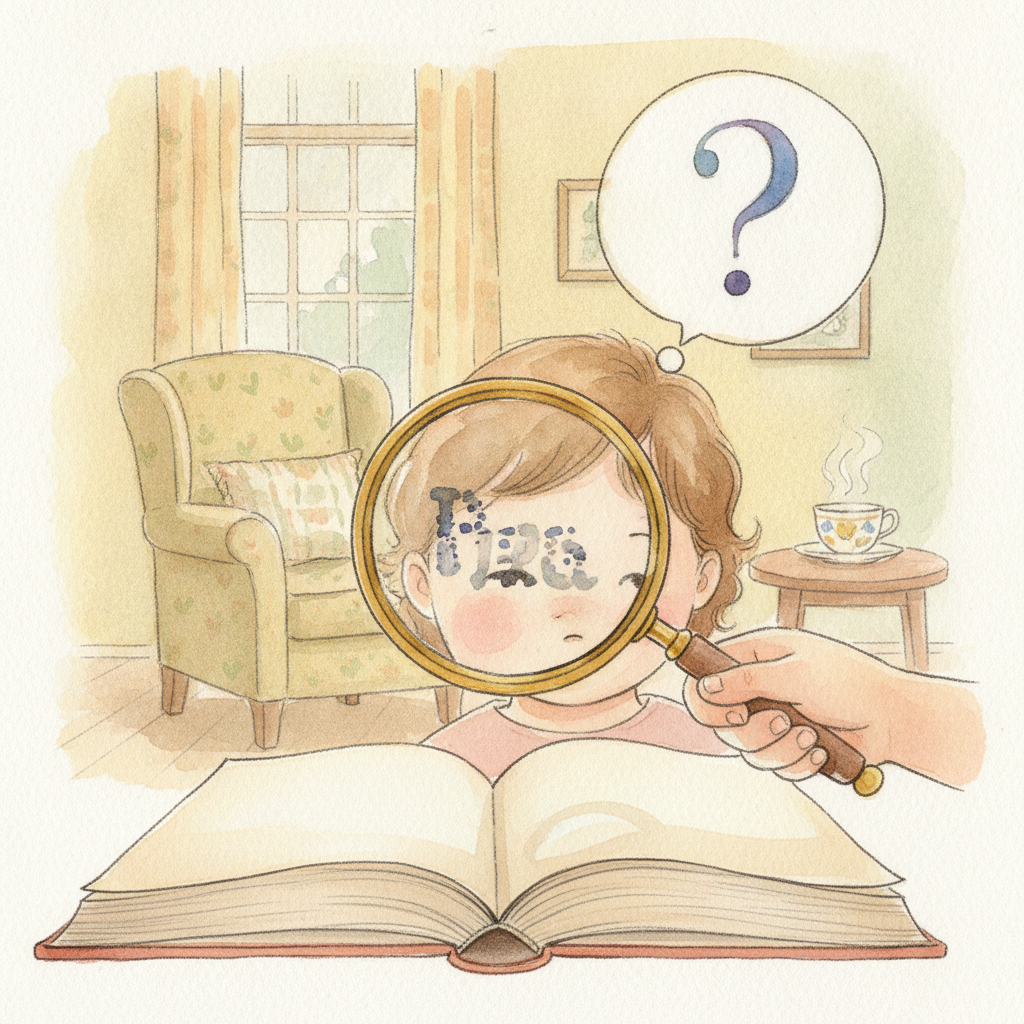
To truly grasp why reading is more than just phonics, it helps to peek inside the incredible organ doing all the heavy lifting: the brain. The process of reading isn't confined to one small area; it's a complex orchestral performance involving multiple brain regions working in exquisite harmony. When a child learns to read, their brain doesn't just activate a 'phonics centre'; instead, it forges intricate neural pathways that connect visual recognition of letters, auditory processing of sounds, and semantic understanding of meaning.
Neuroscience research, including Stanislas Dehaene's work on how the brain learns to read, shows the brain's remarkable plasticity: its ability to change and adapt by forming and strengthening these neural connections. For reading, this means that as children practise, their brains become more efficient at recognising patterns, associating sounds with symbols, and linking those sounds to words they already know orally. It’s not just about recognising the sound /k/ for 'c'; it’s about instantly connecting 'cat' to the furry creature, understanding its role in a sentence, and even recalling experiences or images associated with cats.
This intricate 'reading circuit' involves areas responsible for phonological awareness (the ability to hear and manipulate sounds in spoken words), orthographic mapping (instantly recognising entire words without sounding them out), and semantic processing (understanding the meaning of words and sentences). When we overemphasise phonics to the exclusion of other elements, we risk neglecting the development of these other crucial brain networks. A strong phonological foundation is essential, but a well-rounded reader needs a robust, interconnected neural network that seamlessly integrates all these components, allowing for fluent, meaningful engagement with text.
Building a rich vocabulary: the unsung hero of reading success
Here's something many parents miss: a child can perfectly decode a word, but if that word isn't already part of their oral vocabulary – the words they understand and use when speaking and listening – then comprehension is stalled. Imagine reading a sentence like, 'The anachronism in the exhibit was glaring.' You might be able to sound out 'anachronism', but if you don't know what it means, the sentence remains largely incomprehensible. This highlights the immense, yet often underestimated, power of a rich vocabulary.
Vocabulary is the bridge between decoding and understanding. Children with broader vocabularies have a significant advantage because they already possess a mental 'dictionary' that they can access when encountering new words in print. This isn't just about knowing lots of fancy words; it's about having a deep and wide understanding of common and less common words across various contexts. Research consistently shows a strong correlation between vocabulary size and reading comprehension. The more words a child knows and understands, the more easily they can grasp the meaning of texts, even when encountering unfamiliar concepts.
So, how do we cultivate this crucial vocabulary? It’s not about rote memorisation. Instead, it’s about rich, daily language experiences. Talk to your children about everything and anything, using a diverse range of words. Explain new words as you encounter them in daily life or in stories. Ask open-ended questions that encourage them to use descriptive language. Read aloud extensively, exposing them to words and sentence structures that might be above their independent reading level. The 'Matthew effect' in reading – where early advantages compound over time – is particularly evident here: children with larger vocabularies tend to read more, which further expands their vocabulary, creating a virtuous cycle. This constant exposure and interaction with language is a quiet but mighty force in building brilliant readers.

The joy factor: cultivating a love for reading
Let’s be honest: if something feels like a chore, we tend to avoid it. The same goes for reading. While we want our children to master the mechanics, if the process is consistently stressful, demanding, or devoid of enjoyment, they're likely to disengage, regardless of their phonics prowess. This is where the 'joy factor' comes into play. Framing reading as an enjoyable journey of discovery, rather than just a skill to be drilled, is paramount for long-term literacy success.
When children experience joy and pleasure in reading, they are intrinsically motivated to seek it out. They become curious, engaged, and resilient in the face of challenges. They see books as portals to new worlds, sources of fascinating information, and companions for quiet moments. That motivation helps them see difficulties as something to work through, rather than proof they're 'no good at reading'. If a child approaches reading with dread, their brain, under stress, is less receptive to learning, potentially hindering the very cognitive processes we’re trying to build.
Making reading a positive, shared family experience is one of the most powerful things we can do. It's about creating a culture where books are valued, stories are discussed, and quiet reading time is cherished. It’s about letting children choose books that genuinely interest them, even if they're graphic novels or non-fiction about dinosaurs. When reading is infused with warmth, connection, and curiosity, it transcends a mere academic exercise and becomes a core part of family wellbeing. This love for reading, ignited early, is the fuel that keeps children returning to books long after the phonics lessons are over, transforming them into lifelong learners and passionate readers.
Making time for connection: the role of shared reading
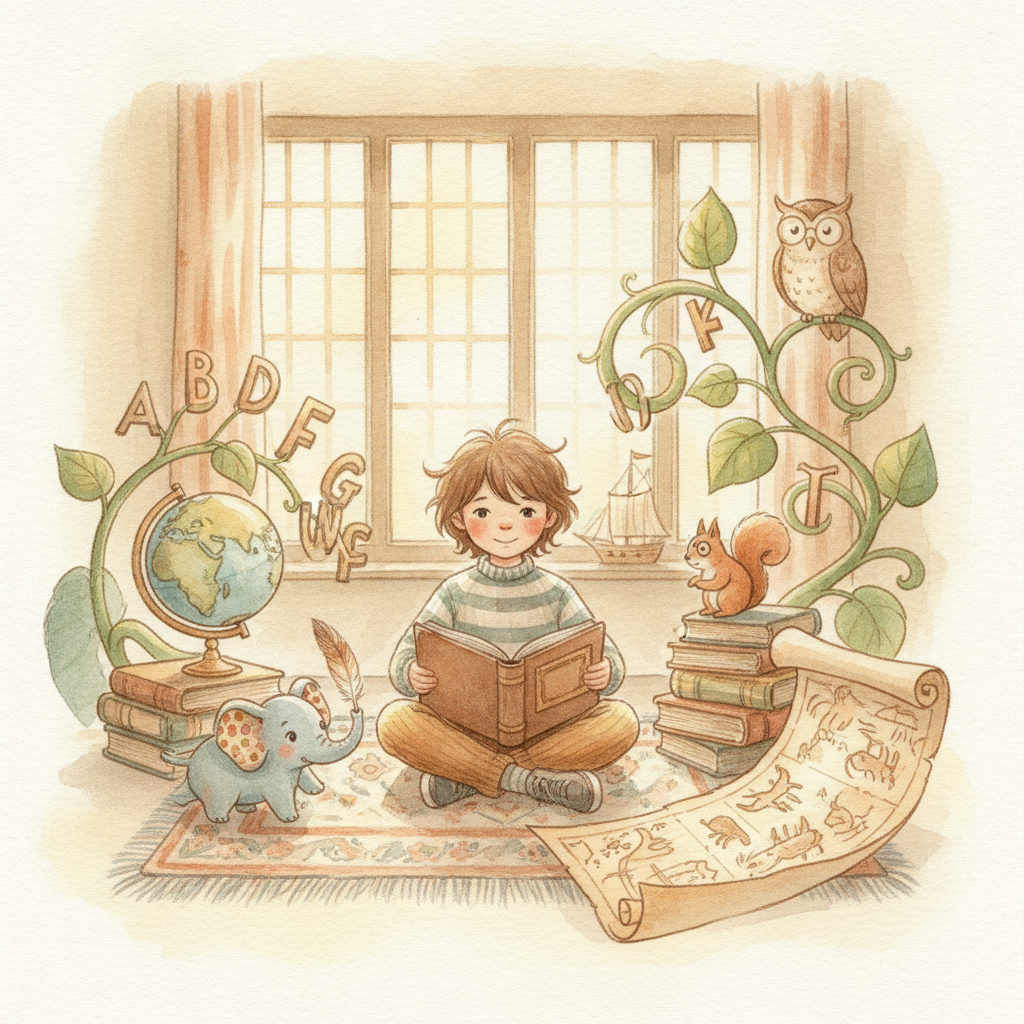
In our fast-paced lives, it's easy to view 'reading time' as purely independent practise, especially once children begin to decode on their own. However, continuing to read with and to your child, even as they grow older and become more independent readers, is a crucial, often overlooked, aspect of their literacy development and family wellbeing. This isn't just about snuggling up with a picture book (though that's wonderful too!), it's about sharing the experience of stories, information, and language at a level often beyond what they can decode independently.
When you read aloud to your child, you're doing so much more than just telling a story. You're modelling fluent, expressive reading, demonstrating how punctuation dictates rhythm and tone, and exposing them to complex vocabulary and sentence structures that they might not encounter in their own reading material. This oral exposure significantly boosts their comprehension skills and general knowledge, laying a stronger foundation for when they eventually encounter these more complex texts themselves. It’s a powerful, low-pressure way to expand their horizons and broaden their understanding of the world.
Beyond the academic benefits, shared reading time is a potent bonding experience. It creates moments of connection, quiet intimacy, and shared laughter or wonder. It reinforces the idea that reading is a pleasurable activity, not just a task. These shared moments of learning and connection add up over the years. It's a prime opportunity for discussions, questions, and exploring ideas together, nurturing not just a reader, but a critical thinker and a curious individual. So, carve out those precious moments for shared reading; they are investments in both literacy and connection.
Experts referenced in this article: Maggie Snowling, Stanislas Dehaene
- phonics
- reading comprehension
- vocabulary
- reading aloud
- early reading
Enjoyed this? Create a personalised story with your child on BAMJOY.